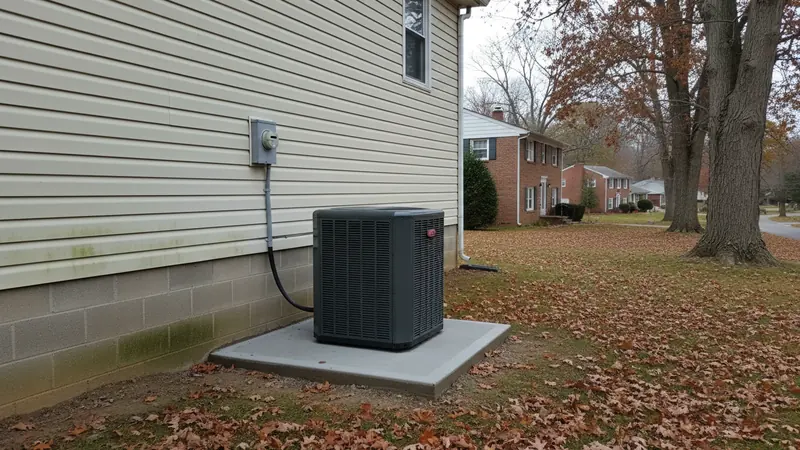
Before you replace a furnace, air conditioner or heat pump, settle the details. Size. Parts you’ll keep. Outside changes. Written price. Proof it works.
Decide what the replacement must fix
If your system has stopped working, ask the installer to name the failed part in writing. Ask them to put the repair option in writing too. Get those answers before you compare replacement quotes. If it still runs but leaves rooms uncomfortable, describe where and when that happens. Replacing equipment may be one job. Getting air to a bedroom may be another.
The federal Building America guide recommends checking your equipment before you decide what to replace. It recommends checking how heat or cooling reaches your rooms too. Check whether equipment you keep can support the upgrade, including its power and airflow needs. Ask for your quote to list what stays. Ask why those parts will work with the proposed equipment.
For a heat pump, ENERGY STAR recommends a Manual J calculation of your home's heating and cooling needs. Ask which features of your house the installer used. Ask how those features led to the size they propose. Mention changed windows, insulation, finished rooms and additions during the site visit. The old equipment label alone does not describe your house today.
Source: U.S. Department of Energy/Pacific Northwest National Laboratory, Existing HVAC System Upgrade or Expansion, updated 2018-05-29, guidance with no regulatory effective date; U.S. EPA ENERGY STAR, Air-Source Heat Pumps, undated guidance, no effective date stated. Gathered 2026-09-23.
Put every changed connection in the scope
Ask for an equipment list with the indoor and outdoor models, controls and any backup heat. Ask the installer to mark which ducts, refrigerant lines, drains, wiring and fuel connections will stay. You can then check what “complete system” means against the work.
Virginia requires installers to follow equipment listings. They must also follow manufacturer instructions where these are stricter than code. Ask how any part you keep meets the new system's requirements. “It worked with the old unit” does not explain whether it suits the new one.
For gas equipment, you can find Loudoun's permit and plan-review rules on the county HVAC page. Will the furnace move or have a higher input? Ask who will prepare the gas drawing. Check whether the price includes that work. Loudoun's drawing criteria cover connected appliances and piping across the gas system. Your contractor may need details about the water heater, fireplace or other gas appliances. That applies even if your problem is with the furnace.
For propane work, discuss any proposed tank, regulator or outside-line changes before you accept the price.
Source: Virginia DHCD, 13VAC5-63-120, Workmanship, materials and equipment, last amended effective 2021-07-01; Loudoun County Building and Development, residential fuel gas review notice, effective 2025-10-01, and Plans Submittal Criteria for Residential Gas Permits, undated, no separate effective date stated. Gathered 2026-09-23.
Settle the outdoor location before ordering
Moving the outdoor unit or adding outside pipes can affect more than the equipment connections. In Loudoun's county historic districts, most outside changes need review before work begins. That matters if your heat pump adds equipment or visible lines where there were none before.
The county oversees historic districts including Aldie, Bluemont, Goose Creek, Oatlands, Taylorstown and Waterford. Leesburg, Middleburg and Purcellville oversee their own town historic districts. Check which district covers your actual property boundary. A historic place name or National Register listing alone does not tell you which local rules apply.
Loudoun says interior alterations do not need a Certificate of Appropriateness. Neither does replacing existing materials in kind. Staff can also review some minor changes. That does not mean every HVAC change qualifies. For an outside change, have the proposed location, visible pipe routes and any screening reviewed for your property. Do this before you order equipment.
Ask for the quote to name who handles that review. Ask it to say who pays if the layout changes. County historic approval does not automatically give you a zoning permit. Settle the route first. That helps you avoid buying equipment for a spot you later have to change.
Source: Loudoun County Planning and Zoning, County Historic Districts and Applying for a Certificate of Appropriateness, undated current guidance, no effective dates stated. Gathered 2026-09-23.
Compare the written price and the exclusions
We could not verify a primary-source price range for home installations in Loudoun County. The permit fees on the county HVAC page do not tell you what equipment, labour or connections will cost.
Ask each bidder to price the same work. Include equipment, removing the old system, parts you’ll keep, changed connections, duct work, tests and repairs to opened surfaces. Ask for allowances and exclusions to be listed separately. If a bidder cannot yet price hidden work, ask what would trigger an extra charge. Settle how you will agree to it.
Virginia's contractor rules require a signed written contract for residential work. You must have it before work begins or payment is accepted, subject to the rule's stated exceptions. It must say when work starts. It must give the expected finish date. It must include the price terms and payment schedule. The contract must address permits, inspections and zoning. Changes to cost, materials, work or the expected finish date must be put in writing. They must be signed too.
Ask for separate equipment and labour warranty terms. Find out who registers the equipment. Check who comes back if there are problems. Ask which charges you still have to pay. Without those details, you cannot tell what the warranty covers in practice.
Source: Loudoun County Building and Development, Fee Schedules and Payment Options, undated, no page effective date stated; Virginia Board for Contractors, 18VAC50-22-260, Filing of charges; prohibited acts, last amended effective 2025-09-01. Gathered 2026-09-23.
Plan access and the period without heating or cooling
Before the crew arrives, walk the route from the entrance to the equipment. Ask what must move. Check whether the new cabinet fits through the openings. Ask who repairs any surfaces that must be opened. Clear the agreed work area so the crew can reach the equipment and connections.
Ask when your old system will be disconnected. Ask when the new system should be running. We could not verify a primary-source figure for how long a home replacement takes in Loudoun. A county permit-processing target cannot tell you how long you will be without heating or cooling.
If the work needs inspection, plan how the inspector will get access later. You can find Loudoun inspection results through LandMARC. At handover, ask the installer what inspections or corrections are still outstanding. You need to know what remains unfinished.
Source: U.S. Department of Energy/Pacific Northwest National Laboratory, Existing HVAC System Upgrade or Expansion, updated 2018-05-29, no regulatory effective date; Loudoun County Building and Development, Building Inspections, undated current guidance, no effective date stated. Gathered 2026-09-23.
Ask for test results when the system starts
Ask the installer to leave the startup results with the model information and manuals. ENERGY STAR lists airflow, refrigerant charge and duct leakage as checks that affect comfort and efficiency. Ask for the measured results. Ask which equipment requirements they were checked against.
If a room remains uncomfortable, record the room, thermostat setting and operating conditions. Ask the installer to compare your complaint with the airflow checks. Ask how it fits with the work you agreed. Oversized equipment can cycle too frequently. Poor airflow can also leave your house damp or uncomfortable. A new unit does not rule out either problem.
Ask the installer to show you how the controls work. Ask them to explain which maintenance tasks the manuals say you must do. Keep the startup record, warranty documents and applicable inspection results together. If the new system does not deliver the comfort promised, those records give a returning technician something to investigate.
Source: U.S. EPA ENERGY STAR, HVAC Quality Installation and Clean Heating and Cooling, undated homeowner guidance, no effective dates stated. Gathered 2026-09-23.